As you may already know, the Hazelcast In-Memory Data Grid (IMDG) ecosystem includes a variety of clients for different languages and runtimes, which includes Node.js client library as a part of that list.
What is the most important feature an Express.js application can have? Maybe using sockets for real-time chats or GraphQL instead of REST APIs? Come on, tell me. What’s the most amazing, sexy, and hyped feature you have in your Express.js application?
Have you ever got a task in which you build a service to listen or watch another project (folder). If there is an error, a notification will be thrown. In this tutorial, we’re gonna look at a way to solve this problem: watch a folder for changes in Node.js. The problem is determined.
That’s why your favorite obscure library with 1 or 2 contributors has not merged your pull request. In order to remedy this situation, a suite of automation tools can be employed to free you from the shackles of keeping dependencies up-to-date, ensuring code quality, and releasing new versions of your software.
I’ve compiled below 20 skills, technologies and considerations on choosing between them. Picking the right tools became one of our greatest challenges — the Node.js ecosystem has matured and present attractive options in almost every field.
In the last blog, “GraphQL Mutation: GraphQL Essentials Part 2”, we learned how to generate mutations by building a real-world application. Please go through the introduction if you are a beginner in the world of GraphQL.
I’ve been working on an app which lets you live stream your desktop. It takes in an RTMP stream from the broadcaster and transcodes it into HLS stream that viewers can watch in their web browsers. In this tutorial, I’ll show how you can build your own video streaming app with Nodejs.
Markdown is a lightweight text markup language that allows the marked text to be converted to various formats. The original goal of creating Markdown was of enabling people “to write using an easy-to-read and easy-to-write plain text format” and to optionally convert it to structurally valid XHTML (or HTML).
TL;DR: In this article, you will learn how to develop RESTful APIs with Node.js, Express, and Auth0. You will start from scratch, scaffolding a new Node.js project, then you will go through all the steps needed to build a secure API.
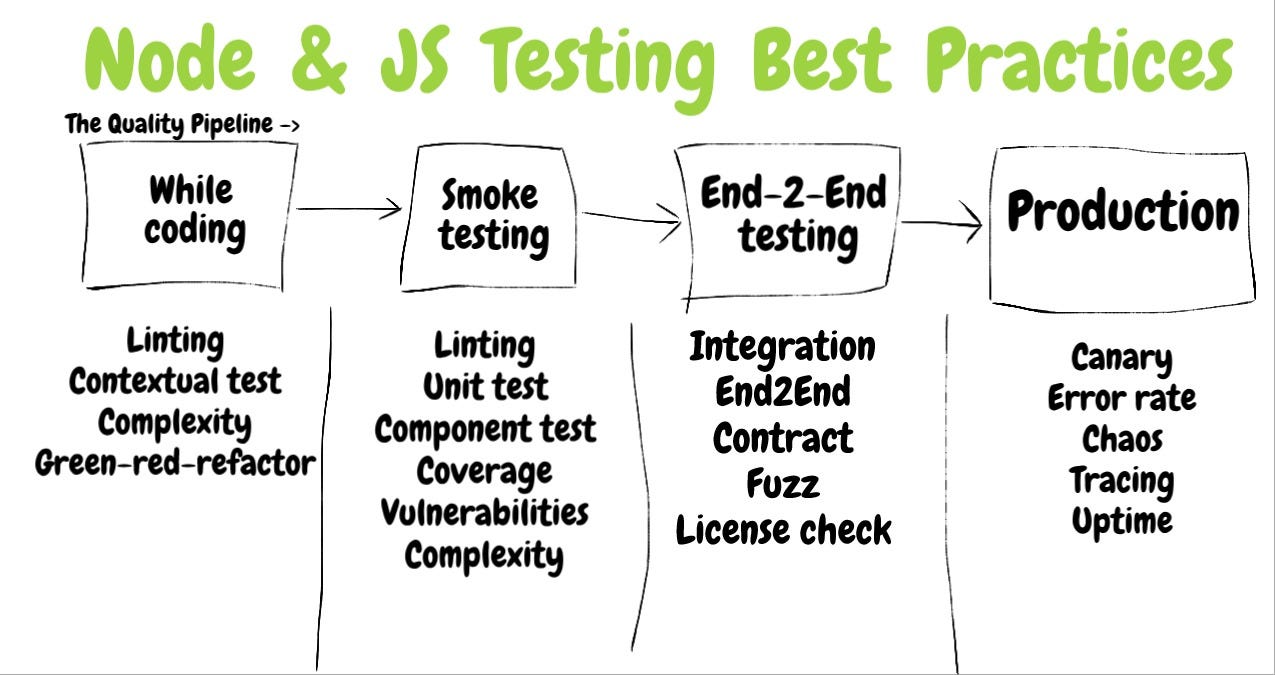
As an independent Node.js consultant I’m engaged and review 10+ projects every year and my customers justifiably ask to focus on testing. A few months ago, I started to document here the insights and repeating errors I observe at the field and suddenly it piled-up into 30 testing best practices.
Three years ago, I started developing an Express.js API for a company. I wondered what could be the best controllers architecture to stay organized as the codebase grows. Influenced by Sails or Rails and by my research, I came to create my own system.
If you have ever worked on a Node.js application before, either built a REST API or an enterprise application, you must have realised how tedious and daunting it was to maintain, especially whenever the application start to scale.
Presumably no web developer is a stranger to REST APIs and the challenges that architecting an effective and efficient API solution brings. In this tutorial we are going to address all of the above using a combination of Node.js, MongoDB, Fastify and Swagger.
More developers have switched to using JavaScript to build more applications, especially for the web. This has brought about an exponential growth in the usage of frameworks built specifically for the JavaScript community to facilitate quick prototyping and building of awesome projects. When Node.
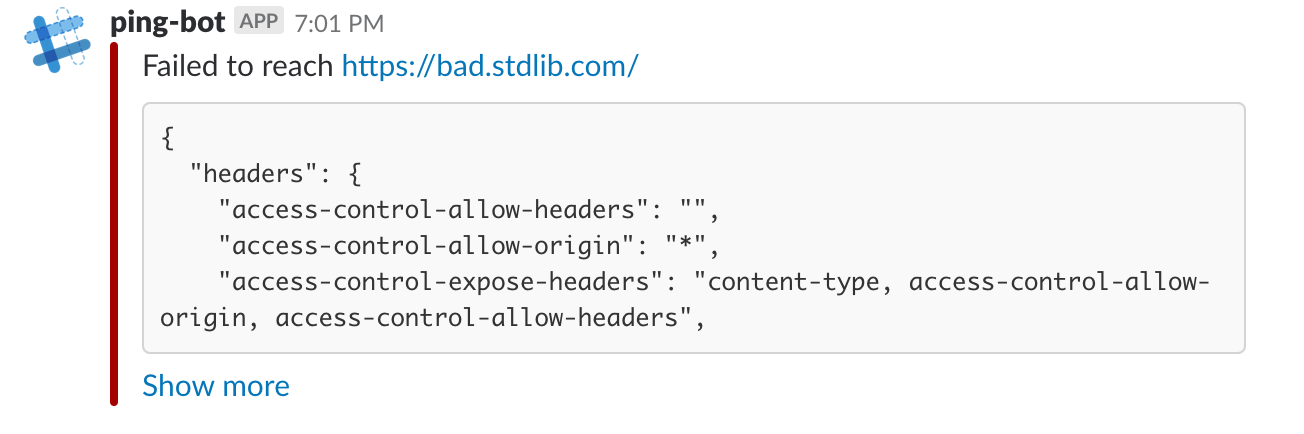
Making sure your website or API is up and running well can be a round-the-clock job. To help in this tireless effort, we can make uptime reports and status alerts visible within the tools we frequently use, like Slack.
Serverless deployment, the intriguing topic grabbing a lot of attention from rookies and veterans alike in the tech ecosystem is finally here. In this article we'll be taking a practical approach to serverless deployment, also referred to as FaaS (Function as a Service).
In this guide, we'll be implementing token based authentication in our own node.js A.P.I. using JSON web tokens. To keep this short and relatively sweet, if you'd like to read about what tokens are and why you should consider using them, have a look at this article here.
In this guide, we'll be implementing token based authentication in our own node.js A.P.I. using JSON web tokens. To keep this short and relatively sweet, if you'd like to read about what tokens are and why you should consider using them, have a look at this article here.
You are requested by a client to watermark an entire library of images, as well as cropping them to a consistent resolution. In fact, your solution needs to be integrated within the client’s existing Javascript infrastructure. This can be done with a simple yet capable (relatively new) package for NodeJS, named Jimp.
Amazon SNS ( Simple Notifications Service ) is a publish/subscribe and mobile notification service. It is used to send message to subscribing endpoints and clients. You can send a large number of messages to subscribers, services, and mobile devices.